

Wednesday
Jul082015
Graduation of Dr Anh Nuygen
 Wednesday, July 8, 2015 at 10:48AM
 Congratulations to Dr Anh Nuygen, who graduated with her PhD from our lab!

Becoming a Scientist

Virus Fighter
Build a virus or fight a pandemic!

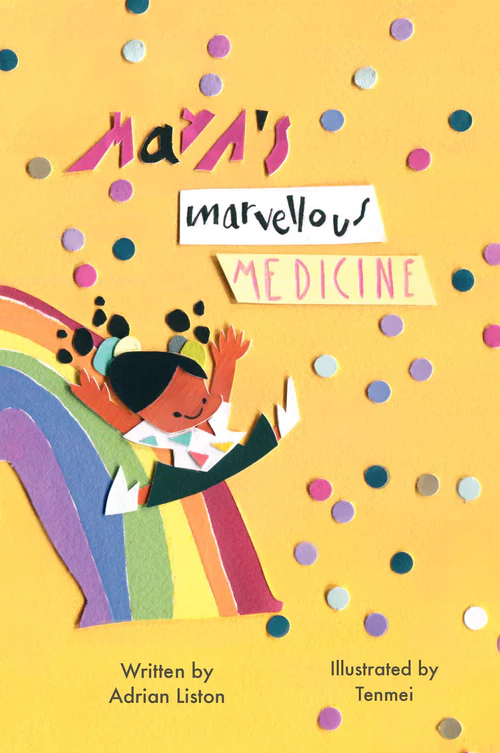
Maya's Marvellous Medicine
Battle Robots of the Blood

Just for Kids! All about Coronavirus

Learn about our spin-off, Aila Biotech!

Wednesday, July 8, 2015 at 10:48AM Congratulations to Dr Anh Nuygen, who graduated with her PhD from our lab!
Thursday, July 2, 2015 at 10:48AM A study in the aftermath of 2010 tap water contamination in the Belgian towns of Schelle and Hemiksem provides valuable insights into the cause of irritable bowel syndrome. A team comprised of scientists at VIB and KU Leuven has made significant progress in uncovering the connection between psychological factors and the immune system. Their findings are based on an investigation of a massive drinking water contamination incident in Schelle and Hemiksem in 2010, and are now published in the leading international medical journal Gut.
 In December 2010, the Belgian communities of Schelle and Hemiksem in the province of Antwerp faced an outbreak of gastroenteritis, with more than 18,000 people exposed to contaminated drinking water. During the outbreak, VIB and KU Leuven set up a scientific task force to study the incident’s long-term effects, led by Guy Boeckxstaens and Adrian Liston.
Seizing an unexpected opportunity
Adrian Liston: “The water contamination in Schelle and Hemiksem was an ‘accidental experiment’ on a scale rarely possible in medical research. By following the patients from the initial contamination to a year after the outbreak we were able to find out what factors altered the risk of long-term complications.”
Anxiety and depression affect immune system
The scientists found that individual with higher levels of anxiety or depression prior to the water contamination developed gastrointestinal infections of increased severity. The same individuals also had an increased risk of developing the long-term complication of irritable bowel syndrome, with intermittent abdominal cramps, diarrhea or constipation a year after the initial contamination.
Guy Boeckxstaens: “Irritable Bowel Syndrome is a condition of chronic abdominal pain and altered bowel movements. This is a common condition with large socio-economic costs, yet there is so much that still remains to be discovered about the causes. Our investigation found that that anxiety or depression alters the immune response towards a gastrointestinal infection, which can result in more severe symptoms and the development of chronic irritable bowel syndrome.”
Psychological factors key in preventing long-term complications
The study’s results provide valuable new insight into the cause of irritable bowel syndrome, and underscore the connection between psychological factors and the immune system.
Adrian Liston: “These results once again emphasize the importance of mental health care and social support services. We need to understand that health, society and economics are not independent, and ignoring depression and anxiety results in higher long-term medical costs.”
For more details, see the original publication: Wouters*, Van Wanrooy*, Nguyen*, Dooley, Aguilera-Lizarraga, Van Brabant, Garcia-Perez, Van Oudenhove, Van Ranst, Verhaegen, Liston*, Boeckxstaens*. * shared authorship. Psychological comorbidity increases the risk for postinfectious IBS partly by enhanced susceptibility to develop infectious gastroenteritis. Gut. 2015, in press.
Adrian Liston
An article written in Healio on our study
Liston lab, Medicine Wednesday, July 1, 2015 at 9:35PM Doug Hilton, the director of WEHI (one of the premier immunology institutes in the world), has written an interesting article about redressing the gender imbalance in his institute. There are some good ideas (and a few not so good ideas) in this article, but the best thing is that he is actually doing something. The vast majority of institutes with a gender issue do nothing but arrange "women in science" training courses and assume that things are either impossible to fix, or will fix themselves with time.
Monday, June 22, 2015 at 10:35AM 
Rosalyn Yalow was born in the USA in 1921. She developed the radioimmunoassay technique, which can measure the concentration of hormones in blood, and studied insulin levels in diabetes. The figure above is of the electrophoresis of pure insulin-I181, of free insulin from the plasma of an control subject injected with insulin-I181, and of free and antibody-bound insulin from an insulin-treated subject injected with insulin-I181, from the paper “Insulin-I181 metabolism in human subjects: demonstration, of insulin binding globulin in the circulation of insulin treated subjects”, J Clin Invest, 1956; 35(2): 170–190. She received the Nobel Prize in 1977.
Like the quote by Françoise Barré-Sinoussi, Rosalyn Yalow highlights the hope of science; however she also bears a warning. It is our responsibility to keep science alive. Inventing vaccines means little if, a generation after their transformative impact on humanity, we put them aside. The social forces aligned against science are strong, and we always need to understand that the advances that we have made as a species were not inevitable and are not immutable. Do not take for granted the luxuries (both physical and intellectual) given to us by science, for they shall fast dissapear if we do not support the bedrock of the scientific method that supports it all.
Sunday, June 21, 2015 at 12:21PM 
Rosalind Franklin was born in England in 1920. She produced the X-ray diffraction images of DNA, and independently determined that DNA was helical and that the phosphate groups were on the outside. The figure above is from “Molecular Configuration in Sodium Thymonucleate”, published in Nature, 1953; 171:740-741, in the same issue as the paper published by Watson and Crick. She later led work on the structure of the tobacco mosaic virus and the polio virus. She died in 1958 from ovarian cancer.
As an aside, this is pretty close to something I tell all potential students in my lab: science is a lifestyle choice more than a career. As evidence, I am posting this from the lab on a Sunday afternoon.
Saturday, June 20, 2015 at 8:41AM 
Christiane Nüsslein-Volhard was born in Germany in 1942. She and Eric Wieschaus identified many of the genes that control the embryonic development of Drosophila. The figure above is of a wildtype fruitfly embryo, and those homozygous for mutations in Krüppel, hunchback, and knirps, from “Mutations affecting segment number and polarity in Drosophila”, Nature, 1980; 287:795-801. She is also associated with the discovery of Toll, which led to the identification of toll-like receptors. She received the Nobel Prize in Physiology or Medicine in 1995 for her discoveries into how complex multicellular organisms develop from single cells. The quote below is from her 2006 book, “Coming to Life: How Genes Drive Development”.
Clearly, biology is the most interesting of the sciences.
science careers, women in science Friday, June 19, 2015 at 11:08AM 
Elizabeth Blackburn was born in Australia in 1948. She and Carol Greider discovered telomerase. Telomerase is an enzyme that loss of important DNA from chromosome ends by adding extra bits of DNA to the end of strands, and plays a role in aging and cancer. The figure above is DNA from a telomerase enzyme reaction, from “Identification of a specific telomere terminal transferase activity in Tetrahymena extracts”, published in Cell, 1985; 43:405–413. She received the Nobel Prize in 2009. When questioned about the large number of women working on telomeres, she replied that “it’s fairly close to the biological ratio of men and women. It’s all the other fields that are aberrant.”
Wednesday, June 17, 2015 at 8:22PM 
Lise Meitner was born in Austria in 1879. She and Otto Hahn discovered the first long-lived isotope of protactinium and articulated how the nucleus of an atom could be split into smaller parts in their paper “Disintegration of Uranium by Neutrons: A New Type of Nuclear Reaction” published in Nature in 1939. The figure above illustrates fission fragments in an uranium-lined ionization chamber connected to an oscillograph. The large pulses were caused by ionization bursts of fast moving nuclei from uranium bombarded by neutrons. Element 109, meitnerium, is named in her honour.
To me, this quote counters the argument that theologists often direct to athiests - that to not believe in the supernatural is to live in a world that is flat and dull. No! Far from it! To pull away the curtains of silly supernatural explanations is to allow yourself to peak at reality, a truth that is far more awe-inspiring and magestic then anything that could have been invented by primitive desert-dwellers.
Monday, June 15, 2015 at 11:50AM Rather than directly address the ridiculous sexist comments by Tim Hunt, I thought I would post a series of quotes by inspiring female scientists. These quotes adorn my office, and were a gift from my wife - who is an inspiring scientist herself.

Françoise Barré-Sinoussi was born in France in 1947. She was part of the team that discovered and identified HIV as the cause of AIDS in 1983. The figure above is of viruses budding from lymphocytes, from “Isolation of a T-lymphotropic retrovirus from a patient at risk for acquired immune deficiency syndrome (AIDS)”, Science, 1983; 868-871. She also identified important factors contributing to mother-to-child transmission of HIV. She received the Nobel Prize in 2008.
To me this quote encapsulates the inspiring nature of science. When you look around yourself, science is everything that has transformed life from being nasty, brutish and short, to one where many of us have love, luxury and peace. This transformation can be extended to everyone if only we use science and evidence-based decision-making.
